Showing posts with label Science. Show all posts

12.4.15

Products of a Static, Literal, Inerrant Bible

A few days ago, a childhood friend of mine shared this video to Facebook. He grew up in the same church as I did and about 3 or 4 years ago he abandoned his faith to become an agnostic. Following the video are some comments between him and one of our high school classmates who, as you can tell, is still a Christian.


Bill Nye The Science Guy says this was the craziest moment from the 2014 creationism debate.
Posted by Business Insider on Thursday, April 9, 2015
Agnostic: All very good points. I must admit that the "Noah's Ark" story was one (of many) things that made me realize the bible is largely fictional. Just doesn't make sense for lots of reasons, one of which he articulates very clearly.
Christian: Never set limits on Jesus...He's fully capable
Agnostic: So he created all of these new species without anyone noticing? Lol. And that is one of the smallest problems with the Noah story.
Christian: Are you saying He can't?
Agnostic: Yep, I am. But, in fiction, anything can happen. My bigger problem is with a God that would destroy his "creation" in such a cruel way. Imagine little children who have done nothing besides being born to "evil" parents being forced through the horror of watching their parents die in such a horrible way and then to die by drowning. If there was such a god...think I'd crucify the SOB myself . But, I draw comfort in the fact that the story is obviously made up...our modern knowledge of geology and archeology really don't leave much doubt anymore. So, if there is a god (and I don't deny it is at least possible), he did not destroy the world with a flood and he (she?) is not what the bible depicts. Anyway, just my thoughts. Hugs
Christian: There are some things I cannot explain nor understand this side of heaven.....but I choose to place my faith and trust in Jesus....someday I will get the whole story but until then I trust in His plan.
First, let me say how pleased I was at how civil the comments were to one another. There is a rooted respect for the other and any disparaging comments were accompanied with hugs or admitting that this is their choice of belief or opinion. Refreshing, no?

Here we have two literal understandings of Genesis 6-8, where because of the wickedness on the earth, God sends a yearlong flood to destroy the earth, but saves 8 people and all flood surviving species in an ark. It is a darling story in Sunday Schools and Sabbath Schools because of the prolific images of giraffes, elephants and polar bears poking their heads out of a semi-circle wooden boat. The narrative of global destruction is glossed over for kids (and many adults) with selective reading focused on the saving love of God.

Agnostic's understanding is rooted in the dissonance of a loving God who has no problem wiping out almost all life on earth, with the added complication of scientific dissonance (sheer numbers of species, geological evidence, and the way too recent timeline). He has decided that the whole Bible must be false, or in his words, fiction. Of course, he has many other reasons not to believe that the Bible is fiction, this being just one.

Christian's understanding comes about since she was taught that the story of the flood must be taken as a literal, factual account. If this is not a factual account, then the Bible can not be accepted as God's word thus falsifying the resurrection of Jesus for instance. She resolves the evident dissonance with childlike faith (a practice endorsed by Jesus) and casually explains away scientific problems as events God could easily orchestrate since He is God.

But is there another way to understand the story of Noah, and other stories from the Bible?

I have been impacted by Mark Noll's excellent book on the history of Evangelical Christianity in North America called The Scandal of the Evangelical Mind. As a result I am far better able to approach historical Christianity and ancient Christian doctrine (and understand why all these new churches came to exist in North America). In short the story is this: When the British churches came across the Atlantic, they abandoned church authority and became a deregulated enterprise. Anyone with a fresh look at Scripture or a charismatic preacher could start a new denomination, especially if they filled pews or tents. Preaching on hellfire was pretty popular as were exciting new interpretations of Revelation. Next came the Darwinists and the real possibility that churches were going to lose members so Christians reacted by actively trying to denounce teachings on evolution. (this is far to brief a telling, hopefully readers can extrapolate).

The result was an almost wholesale rejection of 1800 years of church tradition, which in some ways was important because of corruption. But in the end a great treasure trove of wisdom was lost by the new denominations. One of those treasures is the traditional way the Bible was interpreted. The early church and the churches who preserved these traditions (think Eastern Orthodox, Roman Catholic, Anglican) had ways of interpreting everything from end times theology (which is virtually non-existent by the way), who Jesus was, and of course Genesis. The Bible was not viewed as a book of facts - even Jesus words are probably not all quoted verbatim, but rather a book of truth and story helping reveal God's work among his people. Ultimately, God reveals himself through his Creation as well, and most importantly through His son Jesus through the incarnation.

Back to the flood. If I read the story of Noah as fact I am faced with a dilemma: accept Bible and reject science or reject Bible and accept science.

What if I read it as a narrative to reveal another prelude to the Gospel: end of sin through a cleansing of water (think baptism), salvation of man and creation. Eastern Orthodoxy calls Mary the ark because she carried salvation in her womb. Noah is called out in the New Testament because by faith he inherited righteousness. The "days of Noah" are referenced a few times in the New Testament too as days of wickedness, times where redemption was needed. Imagery of cleansing water appears throughout the Bible.

So, do I believe the Bible to be true? Do I believe the story of Noah to be true? Yes.

Do I believe that all the stories in the Old Testament are factual accounts? Better: Do I have to believe that all the stories in the Old Testament are factual in order to believe that they convey truth and ultimately the truth about Jesus? I don't think so. And I think there are very good reasons not to. The Old Testament is a collection of various authors over many centuries in an ancient world very different from our own. Their use of stories differs greatly from the way we think of stories (think accurate reporting, a team of fact checkers, scholarly review, etc.). The Israelite people conveyed stories to bring identity and meaning and purpose and hope of deliverance and to share what they had come to know about God. They weren't meant to be referenced in geological analysis or as source for speciation in the biology lab. Noah and the Flood teach me that God hates wickedness; God can do incredible things when we are faithful.

I do believe a guy named Noah who was faithful to God existed. I also believe that there was a destructive flood, an ark, saved animals, etc. It isn't important to me whether or not he was one of only 8 living people on the planet after a worldwide, cataclysmic flood. It is important that his story tells a truth about who God is and who we are.

I would certainly appreciate Bill Nye's response to this latter understanding of Noah and a smaller scale flood.

---

At one point in the comments, God's righteousness is questioned since he would have killed innocent children along with the wicked. This is a much deeper problem that Christians ought to wrestle with. This along with the wiping out of entire tribes in Canaan (genocide?) or certain Psalms where the one sings for the destruction of their enemies in some pretty violent ways (reference as the imprecatory psalms or the cursing psalms). How do we resolve this perceived picture of God with the ultimate and most accurate revelation of God through Jesus? Jesus calls on his followers to love and pray for their enemies - not curse them. Instead of calling down fiery sulphur onto the wicked Romans, he allows them to crucify him. Dissonance anyone? I won't get into how I resolve these in this post, but it is certainly worth discussing at some point. Randal Rauser does a fine job in his book which I just reviewed last week (The Swedish Atheist, the Scuba Diver, and Other Apologetic Rabbit Trails) and at his blog. I'm also keen to read the upcoming A More Christlike God by Brad Jersak as he tackles these very legitimate concerns.

24.2.15

Cellulitis and Me


I have been brought low by bacteria again. This time it's a little pathogen genus called staphylococcus. It erupted from a little cut in my ear. I woke up suddenly at 2:30 AM to striking pain on my right ear and neck. Because of where the infection set in, it is called cellulitis. Don't google images of cellulitis.


Foolishly, I went into school that morning (it's always easier to go in than call a sub). I was then sent home at noon as I was green, had the chills, was nauseous, and the right side of my head was bright red. I saw a doctor who prescribed some strong antibiotics (Cephalexin 500 mg) to take 4 times daily. I stayed home for the next two days.


When I went for my return visit to a doctor 48 hours later, she noted that things had not improved, so I was abruptly sent to emergency.


The infection had spread to a greater portion of my face and my ear became more chimplike and stiff, stiff, stiff. In the night I would completely drench my sheets and clothes with sweat. During the day, I was weak. I couldn't chew because of the pain in my jaw and I could only open my mouth about 1.5 cm.


At the hospital, I was given an IV (my first ever!) of the same antibiotic and referred to a clinic at the hospital which deals specifically in infectious diseases. I visited the clinic the next morning and was given a second IV, assessed and told that my improvement was imminent if I continued with the oral pills I was originally given.

23.11.14

Books Reviewed: by Wendell Berry & Lazar Puhalo


Two books by two men from vastly different backgrounds, though still grounded in Christian tradition, tackle the meaning of society and what it means to live side by side with one another through a collection of their essays.

Sex, Economy, Freedom & Community
by Wendell Berry

Wendell Berry is a giant thinker and wildly counter-cultural. He is a farmer in Kentucky, but he is highly regarded by organizations such as Stanford University, Rockefeller  & Guggenheim Foundations, etc. What is lovely about Mr. Berry is that he is living out what he is advocating for in regards to community life, local economies, participating in the restoration of creation, and political activism. Most of all, he is a passionate Christian.

In one chapter, Berry systematically tears down all of the arguments that George Bush Sr. had for attacking Iraq in the early 90s. In another he defends the harvest of tobacco - a coy poke at modern liberalism, though not insincere on the tobacco side either. Another chapter is almost pure satire on the topic of globalization, militarism, and technological progress. Elsewhere he harshly attacks the notion of free trade. These were enjoyable reads, but the real meat in the book were the ones directly addressing the affirmatives in how he believes people made in the image of God ought to live.

Berry is best when he points out nuanced, and sometimes drastically unbalanced, ways we see the world - creation. He points out that a word like environment "is a typical product of old dualism that is at the root of most of our ecological destructiveness." What's the big deal? Well, it removes local responsibility and care. The term "environment" is sterile, like "ecosystem," it is just a scientific concept rather than a reality of the actual ground in our literal back yard or nearby forest or the field that is ploughed in our neighbourhood.

Berry's treatise on heaven and earth is particularly refreshing. Heaven is the New Earth - a fully restored, functioning earth right where we already are. How should this inform a Christian's actions in local economies? He reignites the concept of dualism and how it has destroyed our ability to truly engage restorative actions in our current life since we believe the spiritual soul is certainly of more import than the decrepit body. It isn't
person = body + soul
rather, it is
soul = body + breath of life
Recognizing that the physical realities are indeed spiritually significant changes all paradigms.

Culture, Commonweal and Personhood
by Lazar Puhalo

As I reported earlier, I had the great privilege of meeting Archbishop Puhalo this past summer. To hear him state his qualifications, you would think he is an astrophysics lecturer at the Sorbonne with a part time neurobiology post at UBC. In reality, he is a highly educated, highly respected clergyman who has been able to take part in countless public dialogues with great scientists on the issue of science and faith. He lives at the Monastery of All Saints outside of Abbotsford, BC where he continues in his retirement to serve as a local bishop in the small chapel there as well as the official liaison between the Archdiocese of Canada and the Government of Canada.

This book takes several of its essays from actual talks Puhalo delivered at various conferences in Romania within the last 10 years. He talks through how science is poorly understood and viewed without a patristic understanding of Christian theology. He lays out the pros and cons of ecumenical dialogues. The idea of personalism is analyzed thoroughly in its historical evolution and its contrast with Orthodox principles.

In general though, it is societal, religious, and philosophical paradigms that are defined, shown insufficient, and revealed how they are incompatible with Christian thought. Though the text is very dense, I was able to follow Puhalo's organized stream of consciousness, and learn a few things in the process. I was both affirmed and challenged.

16.11.14

Brew Six-A: Czar's Imperial Stout


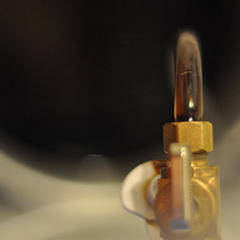
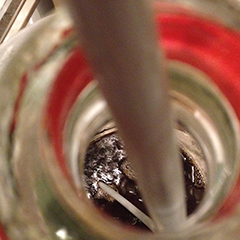
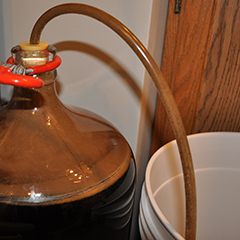
In preparation for the two brews I did (check out Brew Six-B), I read up on advanced brewing in my handbook: The Complete Joy of Home Brewing by Charlie Papazian. I have the 2nd edition (1991); the fourth came out this year. In it I gained a much deeper understanding of what happens during the mash and the boil.


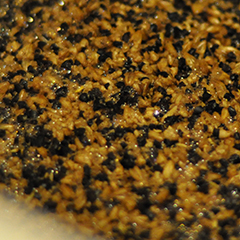
In the mash (the process with hot water and grains), the starches from the malted grains are turned into sugars with the help of enzymes. Not all malted grains have the enzymes required - these are called adjunct grains. It's important not to have too many of these as not much sugar will appear in the wort (sugar water). Various grains bring different flavours and colours to the beer. The flavours often happen via the way the barley, wheat, oats, rice, etc. are malted - this is where all the names for the barley come from (2-row, crystal, chocolate, munich, black, etc.).

Each grain contributes to the colour of the beer. The darkness of the malt is expressed in ˚L or SRM (Standard Reference Method). I was so surprised at how dark my wort came out with only 2.25 lbs of really dark malt of 17.25 lbs of grain.


Hops are way more complicated. Primarily, they are used in bittering the wort - helping to remedy the sweetness of beer. The more malt (sugar), the more hops are needed. In this recipe, I have extracted an enormous amount of malt, so I have to use some hops with high alpha acids. The longer you boil them, the more the acids attach to the malt.

Then there are the hop oils. The oils dissipate very quickly in the boil, but the hops need to be boiled in order to extract them. To get these oils, hops are added at the very end of the boil for 1-5 minutes. The hop oils are what contribute to hoppy aroma and flavour.

The amount of hops used, the amount of acid and the amount of time they are in the boil determines the IBU or International Bitterness Units of the beer. High IBU doesn't necessarily mean the beer will be bitter, but it usually does. In the case of imperial stouts, a high IBU is needed to keep the malt in check.


One of the other new methods I got to try out was the cooling coil. If a brew is not cooled quickly after a boil, it can be infected with wild yeasts and bacteria which can impact the flavour of the beer. The coil is hooked up to a cold water source (ice water bucket with a pump or in my case, an outdoor tap). The water circulates through the wort in the copper pipe and emerges piping hot. It took about 20 minutes to bring the temperature down to 22˚C. It didn't hurt that it was outside in -20˚C weather.


MASH
30 min @ 52˚C; 30 min @ 70˚C; 10 min @ 75˚C14 lbs Canadian 2-Row (2˚L)
1 lb Crystal Medium (45˚L)
1 lb Roasted Barley (300˚L)
0.75 lb Black Malt (500˚L)
0.5 lb Chocolate Malt (350˚L)
BOIL 90 min
60 min 1 oz Northern Brewer 8.6% alpha
30 min 1 oz East Kent Goldings 5.8% alpha
30 min 0.5 oz Fuggles 5% alpha
20 min 1 oz Fuggles
2 min 0.5 oz Fuggles
PITCH
Wyeast 1084 Irish Ale @ 22˚C

23 Litres; 56 IBU; Original Gravity 1.073 (potential of 9.4% ABV)


I am very excited about this brew. It should be packed with flavour and punch. Incidentally, the term imperial is interchangeable with double - so it's a stout that is twice as strong. It's called imperial because the Brits would brew this strong stuff and export it to the czars in Russia.

7.4.11

The Royal Tyrell Museum


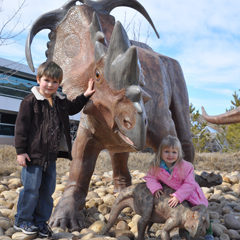
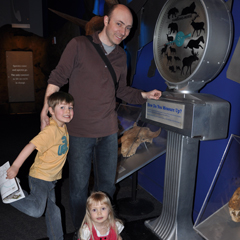
It was my third visit to the Royal Tyrell Museum. The first time I went, my aunt was visiting from the U.S. in 1987 and so we took her there. The second time, friends from the U.S. came for a visit in 1997, so we took them to Drumheller. This time, yesterday, we took Blaise and Acadia. Blaise has been crazy over dinosaurs for nearly a year, so it made sense to drive 80 minutes each way to the badlands and visit this world class museum. Both kids were so excited to go!


Drumheller is an odd place. It gives you the impression that the entire town is there simply because of the museum. You can't grow much there and it gets ridiculously hot there in the summer. The winters aren't mild either. But it is the site of a former coal mine, so the museum sort of saved this dying town. In fact the Midland Coal Mine is famous for the greatest mining disaster of the 1920s.


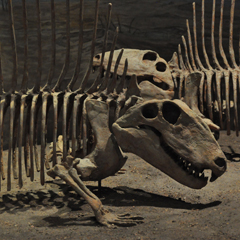
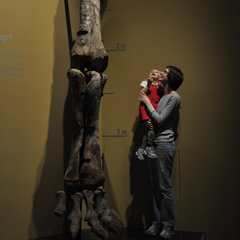
The museum is stellar. The exhibits are captivating. The kids wanted to race from one display to the next, but we managed to slow them down so we could enjoy the ancient skeletons.


I am not a paleantologist wannabe, never was. But I must say, the puzzle solver in me was drawn to the field more and more as I read about new discoveries and about how they painstakingly piece the dinosaur bones together.


We ran into friends from church and also friends from university that we hadn't seen in years. I wonder how many people I know are actually in Drumheller on the average day (except for Mondays - they're closed then).


Toward mid afternoon, Blaise and I went for a stroll on the loop through Midland Provincial Park. The Red Deer River snakes through this valley. You can see the many sedimentary layers since a glacier carved it out a while back.

31.12.10

2001-2010 Decade in Review


2001: Shave my head for the first time, work as a youth pastor at Red Willow Community Church in St Albert AB (Events: Just Shoot Me, Gerta's Eclipse, and fall retreat in Nordegg), canoe the Mackenzie River in NT, camp at Elk Island National Park, attend plays at the Citadel Theatre, travel to Halifax NS for Peter's wedding and Cormier Village NB after a 7 year absence, wake up to news of attack on twin towers on radio, spend Christmas in Smithers BC.

2002: Amber graduates from U of A, church trip to Guatemala and touring afterward, Pépère passes away, continue pastoring at Red Willow leading prayer meetings, leading worship with Kurt and getting kids to YC, substitute teach and then teach language arts and media part time for Edmonton Public Schools, camp at Elk Island, travel to Hope BC for Tey's wedding and Moscow ID for Bethany's wedding, Christmas in Lacombe AB.

2003: Finish my first year teaching at Winterburn School, Amber teaches for six months in Calgary, taken temporarily by Quixtar, cycle across Canada (5858 km) with 8 friends/family, move to Montreal QC and teach science and math at Greaves Adventist Academy, attend the Lord of the Rings trilogy screening at the Paramount Montreal, spend Christmas in NB.

2004: Travel to VT, CT, MA, and NY in the spring, sponsor school yearbook, begin Zaakistan blog, eat very well at various parties in Montreal, run through NDG, friend Stephanie passes away, teach summer session, buy first iPod, drive across North America with stops in NB, MI, WI, and SK, move to Spruce Grove AB to teach music, band and math at Living Waters Christian Academy, impregnate Amber, take Spanish classes, put on school Chrismas concert, host family Christmas.

2005: Put on school spring concert at LWCA, mail out support letters to work in Guatemala, Amber gets huge, enjoy 4 couples friends meals, begin playing Settlers of Catan, Blaise is born, pack up and move to Red Deer, travel with baby to Hazelton BC, Squamish BC, Moscow ID, Montreal QC, Cormier Village NB, move to Tactic Guatemala with Impact Ministries to manage the child sponsorship program, produce promotional material, and guide short term teams, deliver relief supplies to Lake Atitlan following landslide devastation, sell Ester Buck, buy Kia Rio, travel to Fray Bartolomé de las Casas, Antigua, and Copán Honduras.

2006: New school opens in Chicoy, we are robbed while at church, move to house at KM 185, complete first film, turn 30 years of age, visited by Saison, Mom, Papa and Red Willow team, travel to El Salvador, Honduras, Lake Atitlan and Tikal, hike the falls at Chilascó and Pacaya volcano, produce promo video, database, website and slideshows for Impact Ministries, listen to Stanley Cup Edmonton Oiler playoff run online, Amber gets pregnant, screen Strength and Honour: Cycling Canada Coast to Coast at the Montreal International Film Festival, travel to Montreal QC, Cormier Village NB, then Christmas in AB and BC with family.

2007: Two new schools open in Purulhá and Mocohan, we achieve Guatemalan residency, deliver and install 90 ONIL stoves, endure 2 month cough, Acadia is born at home, visited by Will and LWCA team, hike up Purulhá mountain, continue to produce promo videos, guide teams and manage sponsorship program, buy and care for goats with René, join Facebook, Tactic is flooded, take course from Chalmers, deliver 640 pairs of shoes, April spends Christmas with us.

2008: Drive through Petén, Belize, and Quintana Roo to spend holiday with family in Playa del Carmen Mexico, visited by Salomé, Shane, Peter, Red Willow team, Alan and Justin, cycle to Salamá with Garth and Walter, travel to Rabinal, back country near Tactic and with group of friends to Rio Dulce, receive interviews with World Vision Mali and Bearspaw Christian School Calgary, move to AB, buy car and home, niece Abigail and nephew Kai are born, travel to Smithers and Hazelton BC for weddings, teach Bible, Spanish, PE and media at BCS, Amber's sisters live with us.

2009: Begin attending New Hope Church, continue teaching at BCS with math added to the subjects, drywall the basement, spend summer holidays in NB, NS, PEI, BC and AB, buy year passes to Calgary Zoo, attend Leonard Cohen and U2 concerts, start small group, Kylik, Alanna and Indigo winter with us, endure -58 C (with wind chill) in Edmonton, host big family Christmas.

2010: Join Whiskeyjack/Dragonfly Cohousing, begin playing Stone Age, attend Pastor John's book meetings, host Amber's family visit, watch the Vancouver Olympics, Camp with family in Rocky Mountain House, travel to Smithers BC, speak at Katepwa Baptist Camp in SK, celebrate 10 year wedding anniversary in Waterton Lakes National Park, attend several amazing concerts, start teaching Calculus and stop teaching Spanish, cycle to work, April visits from Syria, spend Christmas in Edmonton with my family.


I praise the faithful and ever present God for this blessed decade.

8.4.08

KA-BOOM!

We own a stove fueled by propane. The pilot light does not work, so in order to use the stove top elements or the oven, we've got to use matches.

Last night, I lit the oven to cook some taco shells and shortly after I lit it, it went out leaving the propane valve open with no fire to burn it up. I realized quite quickly that it had gone out because it wasn't heating up, so I sniffed to see if there was much gas in the air and didn't smell anything too strong. I lit a match a few steps away from the stove and brought the match slowly down to the oven element. No fire, so I opened the oven valve. It lit and...

KA-BOOM!

It lasted about 1/2 a second and lit up the whole base of the stove. The propane had settled low so I couldn't smell it. I checked my knuckles and eyebrows, all the hair was still intact.

My children's nerves weren't intact though. After I let out a howl of surprise that sounded exactly like my father when he lets out howls of surprise, they began to cry uncontrollably. We consoled them for a few minutes while they cried without knowing what they were crying about.

Then I relit the oven. Mmmmm tacos.

16.3.08

I'm 100000


I've gained one more digit in binary today. It'll be another 32 years before I get another and it took 16 to get this one. The fact that 2 X 2 X 2 X 2 X 2 = 32 makes 32 a better number than 30 (or 31 for that matter). Interesting note on a couple of alphanumerical systems L = 30 and B = 2 so LB = 32. I would have thought - different alphabet, different amounts for each letter. The Mayan representation (3 dots over 2 lines) is counter intuitive to how you might imagine it to mean: the top dot represents 20, the next two dots represent 2 and each line represents 5. Notice how the Roman, Egyptian and Babylonian (bottom right) are so similar.

The merging of culture and mathematics.

Thanks to all my birthday wishers and especially my wife and spawn who are making the day super special. You're a kind bunch.

29.9.07

Handyman


Well, I got my share of hammertime today. First thing this morning, I borrowed some powertools and bought some materials then built a stand and headtrap for milking the goats. I filmed the whole thing to use in my upcoming documentary For What it's Worth, Milk a Goat.

Then I remembered that our showerhead (aka widowmaker) had a meltdown on Thursday, so I picked up a new one and installed it. It's runs so smoothly and there's actually water cascading over my whole body now when I shower. Sweet.

Then I noticed that the kitchen tap was squirting in all sorts of wrong directions, so I took it apart and cleaned it out - cleaned the pipes so to speak. Now it runs smoothly.

10.4.07

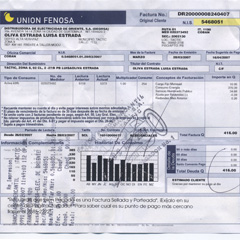
Q/kWh


I feel as though our electric bill is very expensive and I've been meaning to ask what it costs everywhere else. Here's how my bill breaks down:

Fixed monthly fee
Q10.79 = CDN$1.67 = US$1.41
Monthly public lighting fee
Q34.70 = CDN$5.38 = US$4.53
The first 100 kWh costs
Q0.779/kWh = CDN$0.121/kWh = US$0.102/kWh
Every subsequent kWh costs
Q1.662/kWh = CDN$0.257/kWh = US$0.217
We use about 250kWh per month for a total of
Q400 = CDN$62 = US$52
We used to pay up to Q600-Q700 each month until we put in fluorescent bulbs in.

Note also what is drawing power each month: refridgerator, microwave, toaster, showerhead*, computer and peripherals, TV/DVD player, washing machine, 4 incandescent light bulbs, 8 fluorescent bulbs, and little stuff like phone chargers and spice grinder. More importantly, note what is not drawing power: clothes dryer (we don't have one), stove (we use a gas stove), and house heaters (we stay cold).

I guess I'm wondering if the price per kWh is high or if our usage is high or both. To give me an idea, what does it cost to power your house?

*a heating element that heats the water as it passes through