Showing posts with label Poverty. Show all posts

21.3.14

Thoughts on Community Development


It's been 1 year since I boarded a plane to visit two African countries and a community development organization in each one. Since that time, I've really let the ideas and realities of what is happening in these successful enterprises percolate. Here are the thoughts that have persisted.

SOUTH AFRICA
My first stop was Bhekulwandle, Malagazi*, South Africa. I blogged about Seed of Hope when I returned from Africa and the things they are focusing on and the leadership they have in Carl Waldron - a very good friend of mine. What remains with me is slow going. I think of the hospice like service they have in providing supportive care for those dying of AIDS and those coping with HIV. Much of their clientele in this field is not in a position to respond and begin doing in the place of those that do in the present - not exactly a sustainable program - necessary and life giving, but not self-sustaining.

But, let's discuss something that does have the possibility of self-sustainability: Equipping Young Leaders. Seed of Hope has several programs targeting kids of all ages with support in areas of health, spiritual growth, educational tutoring, sports programs, and community building. Let's imagine that 50% of these kids who are equipped remain in the community long term. Then, let's imagine that half of those actually use the skills and support they have received for the betterment of their community. This is probably optimistic, but it is simply to underscore two points:
  • The harvest of this investment is largely expected to emerge 10-20 years from now (of course there are immediate results, but they will likely pale in comparison with future results). So, all of the resources spent today are done with a view for a couple decades down the road. 
  • The other point is the relational aspect of the initiative. With the long view in mind, less is made of current results than is made of strengthening relationships between the staff and the young people coming by Seed of Hope. I think this is a clear indicator of success.
MALAWI


Kamanzi, Malawi was my second stop. My church has been in partnership with the communities in Kamanzi, a rural collection of 5 dominant villages. World Renew has been applying principals of community development on our behalf for the past 4 years and just over a year ago, Peter Timmerman took the helm. I was really struck by Peter's dissatisfaction. From the perspective of me and my fellow church member, some real progress had been made through seed loans, ecosan latrines and goat/pig husbandry. But Peter could see the relatively low economic and probably low espousing of real change by the greater community of some of the principals. His questions: Will what we are doing have a lasting and real impact on food security in these communities? Do the dollars (or kwacha in this case) and sweat equity in these projects really pay off?

His dissatisfaction helped me see the value of the big picture view, the years of experience and training he brought to the organization. In many ways, I'm stuck in the camp of "if I can take a picture of a result, be it great or small, we have succeeded!" [I shudder as I write this, but I'm being honest.] The admission that we can do better is probably the most humble thing we can do and ultimately better for working with a community who already has a hard time dreaming of a bright, less hungry future.

Shortly after we left, Peter blogged about the second thing that has stuck with me: This is a slow, slow process. And that is a good thing. Africans understand this. Sadly, westerners have a difficult time learning the value of slowing down. Ultimately, the slower, the better long term and the more buy in from the community.

*Just realized that this community is in a different province than neighbouring Amanzimtoti and Durban which are in KwaZulu-Natal. You can see the difference on either side of the road running between the two communities.

3.7.13

Reflections: Seed of Hope in South Africa


My first week in Africa was spent with the wonderful Waldon family who have been in the Amanzimtoti / Bhekulwandle area of South Africa for the last six years. I knew them in Saint Albert when I was working my first job out of university at their church. Amber and I have been supporting their work which is running The Seed of Hope.

I was able to spend 4 days at the centre where I think I got a good sense of what the community is like, what the needs are, and how Seed of Hope is seeking to bring new life to the area. I should add that school was on holidays, so things probably weren't running exactly the same as they usually are.


First, the staff. Carl shared lots of stories with me about the staff who I saw working in their various areas. Most of those with hands on work were either from Bhekulwandle or nearby. They grew up in poverty and didn't have the same opportunities for education and employment (unemployment in the area is around 80%). I listened to them sing and share during staff devotions. They are both grateful for the opportunity to work and to serve God and their people. They are passionate about their work and they are not above having disputes among themselves - though they are willing to resolve matters too.

Those in positions of leadership or in volunteer positions come from the wealthier areas or from other countries. Equally passionate and seeking restoration in this very depressed area, these folks drive vehicles, generate funding, plan events, connect with the media, and help manage the centre.


In speaking to Carl Waldron, the CEO, I learned that Seed of Hope has had numerous short term mission teams visit. Some of those visiting have told him that they have seen far worse poverty and that the efforts here would probably be better used elsewhere in the world. While it's true that there are more destitute regions in the world (South Sudan or Haiti come to mind immediately), what is truly unique is the level of brokenness in the community. In Bhekulwandle there are certainly deficits in nutrition, work, educational opportunities, access to healthcare, etc. but not to the some of levels I saw in Guatemala or Malawi. What is different is the staggering level of violence against women and girls and the incredibly high incidence of HIV (this South African province alone has 13% of the world's HIV infected). On top of all this, while South Africa has emerged as a leader on the continent economically, this is one of the very forgotten regions so there is little by way of local government support.

While I was there I heard stories that still haunt me today. I won't share them online, but I have no qualms expressing that this part of the world is one of the darkest, most needing of our and God's love.


So, what are they doing to reach out to the people in Bhekulwandle? Three different spheres of influence, all of which are applied with a deeply personal touch which builds relationships:

  • skills training for adults (sewing and gardening mainly)
  • teaching life skills to children (after school programs, tutoring, counseling, leadership)
  • HIV/AIDS outreach (testing, counseling, support groups, home visits)

This is all done with a very healthy view of sustainable development: take it slow, empower the population, and build on the strengths of people you work with.

Overall, I was very impressed with Seed of Hope. I encourage you to support the organization, you can give to Hope Shares or RESCU International.

28.3.13

Tutoring Calculus in Bhekulwandle [Seed of Hope]


Carl hooked me up at Seed of Hope with one of their after school programs led by a great guy name Musa. Musa leads tutorials and discipleship programs with jr and sr high students living in an impoverished area between holiday town Amanzimtoti and Durban township Illovo.

The students who showed up were told to bring questions and questions they did bring. The junior high students worked on multiplying fractions and I showed them how to break numbers down to their factors. Four grade 12 boys arrived with curve sketching questions from their calculus class - a unit I am in the middle of teaching to my class back in Calgary.


One of the challenges that I could see the students are faced with attempting to complete rather complex math operations and tasks without very clear understanding of the roots of these operations. Fortunately, the boys are very diligent and bright, but I fear a lack of access to a willing teacher hampers their ongoing understanding.


Very fun to help out, but I'm not fooling myself into thinking that they will be impacted long term by this. I do hope they were able to get through the week with a little less stress.


21.11.12

Scaling Down


The media response following the XL Foods in Brooks, AB shutdown over the last couple months has been a dominated by concerns to make food safer: more regulation, more measures to safeguard the quality of the meat. What is remarkable is the silence regarding the state of food production in Canada and the alarming trend of centralized food processing. This trend is evident in nearly all types of food. I will use XL Foods as an example.

XL Foods was processing about one third of the beef in Canada. Beef from all over western Canada was being processed by workers who had no stake in the company owned by Nilsson Bros. which suggests the care they take in processing is probably directly proportional to the care which their employers take of them. It also means that if a rancher wants to sell their cattle, they have fewer and fewer options of buyers.

Of course the visible goals of centralized food processing is to offer lower prices to consumers and to present standardized quality to the marketplace. Below the surface however is the desire for economic dominance and a strong competitive arm in a global market. Over time, mammoth food producers have absorbed small producers. With the incredible volume of meat that one packaging plant can export, they can easily undercut any small time producer. This is basic capitalism. Who are we to argue with allowing one group to push out another group, especially if it will cost us less for that particular product?

The problem is that it is not a one-dimensional issue, the dimension being economic. The environmental impact of massive feedlots and waste from large scale processing can’t be easily ignored. Drive through Brooks on a hot summer day. What about turning the vast majority of a population into employees rather than small business owners? Is it a benefit economically to quell any possible incentive for someone to open a butcher shop and employ half a dozen local people who may or may not be shareholders in a small business?

In regards to food safety, the multinational corporate mantra has been “if we’re bigger, we can afford better safety standards.” This has brought a wave of standards that can only apply to large meat plants. A small operation would not be able to afford the types of equipment needed to implement the new regulations. This implies that a small butcher shop would carve up your roast with dirty knives in back alleys riddled with drug needles and rusting cans. However, small businesses have a far greater interest in safety standards for a number of reasons. They know their clientele. They simply wouldn’t want to be the cause of a serious illness like an e-coli infection. Another factor is economic. If a small processing plant gets a reputation for not being safe, it wouldn’t be able to survive. In addition, the regulators would shut you down anyway. What about the cost of the product? With a greater number of meat processors purchasing from ranchers and then selling to consumers, you have the natural laws of competition keeping prices fair for both producers and consumers. These motivations do not apply to the large corporate producer.

What about the food itself? When a kilogram of ground beef arrives at SuperStore or Safeway from XL Foods, it can contain meat from hundreds of different beasts. If one of them was sick or if the feces wasn’t washed off of it well enough, then any kilogram of ground beef with that particular animal’s contaminated meat is also contaminated. This multiplies the risk to highly unreasonable levels and spreads it across a vast and unnecessary geographical area. Let’s assume just one large piece of beef was contaminated in the e-coli outbreak that crippled XL Foods this fall, despite their unprecedented 21st century safety features. The meat from this one source of contamination caused illness from Newfoundland to British Columbia and could have also brought infection to the United States if their food inspectors had not stopped it. 1800 products were recalled. And by products, I do not mean items. This represents thousands upon thousands of items pulled from shelves, many of which were statistically safe, but had to be discarded anyway. This is a massive waste of food.

How does a local community move away from massive, unwieldy and crippling structures like the XL Foods Meat Processing Plant? Or the growing number of discount megastores? Or the governmental pressures to globalize local markets by opening up trade with international producers and consumers? Or culture’s taste for exotic foods and electronics? Or regulations making it difficult for smaller operations to function? Are we too far gone? Have we yielded completely to the comforts and convenience of for-profit banks, chain stores, and processed food?

My hope is that the symptoms of these monstrous systems surface sooner rather than later. People will awaken to reclaim their local economies, to revive the good of the local trades and skills, to diversify the local food production, and to remedy the broken relationships we have with our neighbours. In the mean time, I choose to gradually wean myself off of the comfortable and convenient and begin participating in my local economy.

If this resonates with you, pick up Wendell Berry’s collection of essays: Sex, Economy, Freedom and Community. It is a magnificent book.

7.11.11

Another Brick in the EcoSan Latrine Wall

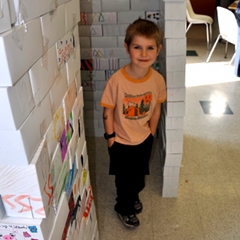
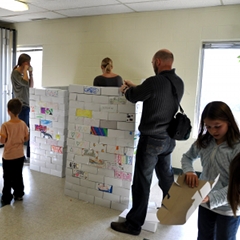
The latest fundraiser I was a part of was the Pink Floyd themed "Another Brick in the EcoSan Latrine Wall." We sold cardboard bricks for $10 and entered people's names in for door prizes that church members donated (wine or beer tastings, multi-course home cooked meals, jewelry making class, etc.). Then a couple Sundays ago at our annual Chili fest potluck, we used everyone's bricks to build a life sized (well, maybe a bit smaller) EcoSan Latrine.

I have to say that ever since having joined Ubuntu about two years ago, I have been impressed at how intentional the group has been in:
  • honouring the people of Kamenzi
  • maintaining the relationships formed in 2009 when we sent a small delegation to Malawi
  • allowing the community in Malawi to manage the development
  • communicate the needs of the Kamenzi communities to our church
  • raising funds for the projects
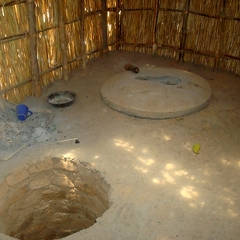
The Ecosan Latrine provides a two-fold benefit to a household in Malawi. First, it improves sanitation by reducing risk of air and waterborn disease as it properly disposes of waste matter. Second, the latrine processes the waste in 6 month intervals (alternating between two holding tanks) into nutrient rich fertilizer which eliminates the need for purchasing increasingly more expensive potash based fertilizer.


5.11.11

Visit from Malawi

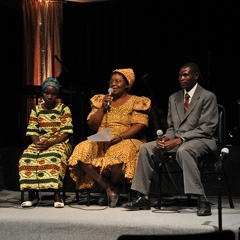
My church was graced with the presence of three directors of community development projects in the Kamenzi area of Malawi for 11 days at the end of September. I have been a member of a community development partnership team from my church called Ubuntu for the past couple years. Since we sent a small group from Calgary to their community in 2009, we thought it would be beneficial to bring a group from Malawi to Calgary so they could meet our community and so that our whole community could meet some people from the community we are working with.

Jane, Bornface, and Christina arrived in Calgary in mid-autumn. The first time the last two left Malawi was this trip (also the first time they boarded a plane). They went from the small capital city of Lilongwe to a couple layovers in Addis Ababa and London and then to chilly Alberta. They seemed a little overwhelmed to begin with, but some winter coats and many warm handshakes brought out smiles and eased them into a very busy and relationship building week and half.

Amber and I were privileged to host Jane and Christina for their four final nights and all three of them for a supper. It was a pleasure to hear of their work first hand. Jane oversees several development projects in conjunction with the CRWRC (Christian Reformed World Relief Committee). Bornface and Christina are the chair and vice-chair of the committee implementing the four projects in Kamenzi we are cooperating with them on. As committee members, neither of them are permitted to benefit from the projects - a sacrifice they are willing to make in order to maintain integrity among their villagers and in order to see the projects through. The repeatedly expressed their desire to see conditions improve among their people.

The trio visited my school to speak (and sing!) at the secondary chapel service. I interviewed them and gave them a tour of our facilities. We outlined the projects we were involved in and shared a bit on how our mutually beneficial relationship functioned - something I am very proud Ubuntu emphasizes.

Their last Sunday in Calgary, they were able to share with our whole church on how the seed loans, goat program, eco-san latrines, and orphan breakfasts were transforming their community. But they were also able to give us their impressions of we as Canadians live:

  • Our wealth is good. We have done things well.
  • Men treat their wives very well, helping with child care, housework, and cooking - an inspiration for Bornface and a shock to Jane and Christina.
  • We are generous and have been a blessing to their community.
  • They want to see many of the ways we do things, taught to them.
  • We are very friendly. We don't use hand sanitizer after shaking their hands (as they had feared we might based on previous experience with North Americans) (how absolutely heartbreaking is that?).
We received a report from our contact in Malawi concerning their debrief. It essentially communicated how much they all enjoyed the trip, but most impacting thing for me was this:
Christina said she was going to miss the bed!!
If Christina's bed is anything like the beds so many Guatemalans use it is nothing more than boards or the ground with a blanket. Christina had shared with us that a typical day for her is to wake at 4 AM, work in the field until 2 PM, prepare a meal for herself and her family of 6 (a couple of her children have grown up already), then volunteer teach adult literacy in the late afternoon.

I was deeply moved by all of this. It brought so much clarity to the inequity on the planet, but more importantly how a relationship can forge a desire to do something about it.

I am hoping to join the crew that Ubuntu sends to Malawi in 2013 and with that, I hope to spend quality time continuing my relationship with all three of these Christians.

22.4.11

Conservatives "Economic Stability" and e


I read in the Calgary Herald earlier this week that the priorities of my Conservative MP Diane Ablonczy are "the economy and stability." Considering conservative policy on the economy (deregulation, privatization, lower taxes, fewer tariffs, foreign investment and ownership, etc.), this seems like the worst way to promote stability. I think Ablonczy should simply say her priority is unmitigated economic growth despite future costs to communities, small businesses, the environment, the disadvantaged, and pretty much every Canadian, very few of whom will be able to afford the inflated costs of living.

As an example: Alberta. Following a conservative economic policy for the past several decades, the province has a bloated infrastructure and skyrocketing prices in energy, food, housing, education and healthcare. How did it happen? They allowed economic growth to happen too quickly. People flooded the province seeking work causing more demand on just about everything. Private industry was willing to pay outrageous wages and prices for services and supplies making it impossible for the public and non-energy sectors to keep up with livable wages. The gap between rich and poor widened shockingly and as history has demonstrated over and over again - the bubble popped and citizens and province are left with things they can't pay for.

In mathematics we have a number, e, which represents the natural growth constant. It is a number related to everything in the universe that grows. It is also called Euler's Number and it's value is roughly 2.7182818284590... (it's irrational). If things grow at a faster rate, I believe it is unsustainable. If it grows at a slower rate, there is a risk of it failing or dying.

It's not that I don't understand the Conservative's policy. They want to lower corporate taxes so more national and international corporations will park themselves in Canada, create more jobs and in turn generate more revenue for the government. The fallacy is twofold. The larger and wealthier these corporations become, the more political power they gain over than the people (gov't) and their interest is not a public one. Second, the money pools at the top and the benefits are not enjoyed by the most of the population.

The Conservative Party of Canada is promoting a get rich quick scheme that is not-sustainable and that puts our nation's proud federal services and increasingly less stable economy at risk.

I believe the greatest challenge we face is that Canada feels it must compete with the United States with tax rates so our jobs won't flow south. If we operate out of fear rather than out of our identity, we risk losing ourselves completely.

If you choose to not vote Conservative, I encourage you to vote strategically (seriously, visit this site). The Green, Liberal and New Democrat Parties are not very far from each other ideologically whereas the Conservatives are drifting further and further to the right.

31.12.10

2001-2010 Decade in Review


2001: Shave my head for the first time, work as a youth pastor at Red Willow Community Church in St Albert AB (Events: Just Shoot Me, Gerta's Eclipse, and fall retreat in Nordegg), canoe the Mackenzie River in NT, camp at Elk Island National Park, attend plays at the Citadel Theatre, travel to Halifax NS for Peter's wedding and Cormier Village NB after a 7 year absence, wake up to news of attack on twin towers on radio, spend Christmas in Smithers BC.

2002: Amber graduates from U of A, church trip to Guatemala and touring afterward, Pépère passes away, continue pastoring at Red Willow leading prayer meetings, leading worship with Kurt and getting kids to YC, substitute teach and then teach language arts and media part time for Edmonton Public Schools, camp at Elk Island, travel to Hope BC for Tey's wedding and Moscow ID for Bethany's wedding, Christmas in Lacombe AB.

2003: Finish my first year teaching at Winterburn School, Amber teaches for six months in Calgary, taken temporarily by Quixtar, cycle across Canada (5858 km) with 8 friends/family, move to Montreal QC and teach science and math at Greaves Adventist Academy, attend the Lord of the Rings trilogy screening at the Paramount Montreal, spend Christmas in NB.

2004: Travel to VT, CT, MA, and NY in the spring, sponsor school yearbook, begin Zaakistan blog, eat very well at various parties in Montreal, run through NDG, friend Stephanie passes away, teach summer session, buy first iPod, drive across North America with stops in NB, MI, WI, and SK, move to Spruce Grove AB to teach music, band and math at Living Waters Christian Academy, impregnate Amber, take Spanish classes, put on school Chrismas concert, host family Christmas.

2005: Put on school spring concert at LWCA, mail out support letters to work in Guatemala, Amber gets huge, enjoy 4 couples friends meals, begin playing Settlers of Catan, Blaise is born, pack up and move to Red Deer, travel with baby to Hazelton BC, Squamish BC, Moscow ID, Montreal QC, Cormier Village NB, move to Tactic Guatemala with Impact Ministries to manage the child sponsorship program, produce promotional material, and guide short term teams, deliver relief supplies to Lake Atitlan following landslide devastation, sell Ester Buck, buy Kia Rio, travel to Fray Bartolomé de las Casas, Antigua, and Copán Honduras.

2006: New school opens in Chicoy, we are robbed while at church, move to house at KM 185, complete first film, turn 30 years of age, visited by Saison, Mom, Papa and Red Willow team, travel to El Salvador, Honduras, Lake Atitlan and Tikal, hike the falls at Chilascó and Pacaya volcano, produce promo video, database, website and slideshows for Impact Ministries, listen to Stanley Cup Edmonton Oiler playoff run online, Amber gets pregnant, screen Strength and Honour: Cycling Canada Coast to Coast at the Montreal International Film Festival, travel to Montreal QC, Cormier Village NB, then Christmas in AB and BC with family.

2007: Two new schools open in Purulhá and Mocohan, we achieve Guatemalan residency, deliver and install 90 ONIL stoves, endure 2 month cough, Acadia is born at home, visited by Will and LWCA team, hike up Purulhá mountain, continue to produce promo videos, guide teams and manage sponsorship program, buy and care for goats with René, join Facebook, Tactic is flooded, take course from Chalmers, deliver 640 pairs of shoes, April spends Christmas with us.

2008: Drive through Petén, Belize, and Quintana Roo to spend holiday with family in Playa del Carmen Mexico, visited by Salomé, Shane, Peter, Red Willow team, Alan and Justin, cycle to Salamá with Garth and Walter, travel to Rabinal, back country near Tactic and with group of friends to Rio Dulce, receive interviews with World Vision Mali and Bearspaw Christian School Calgary, move to AB, buy car and home, niece Abigail and nephew Kai are born, travel to Smithers and Hazelton BC for weddings, teach Bible, Spanish, PE and media at BCS, Amber's sisters live with us.

2009: Begin attending New Hope Church, continue teaching at BCS with math added to the subjects, drywall the basement, spend summer holidays in NB, NS, PEI, BC and AB, buy year passes to Calgary Zoo, attend Leonard Cohen and U2 concerts, start small group, Kylik, Alanna and Indigo winter with us, endure -58 C (with wind chill) in Edmonton, host big family Christmas.

2010: Join Whiskeyjack/Dragonfly Cohousing, begin playing Stone Age, attend Pastor John's book meetings, host Amber's family visit, watch the Vancouver Olympics, Camp with family in Rocky Mountain House, travel to Smithers BC, speak at Katepwa Baptist Camp in SK, celebrate 10 year wedding anniversary in Waterton Lakes National Park, attend several amazing concerts, start teaching Calculus and stop teaching Spanish, cycle to work, April visits from Syria, spend Christmas in Edmonton with my family.


I praise the faithful and ever present God for this blessed decade.

19.11.09

"In Your Hands" - Charlie Winston


I got into my car this morning and CBC Radio 2 lit up ". . . this is the most requested song on Radio 2 right now . . ." and the best song I've heard in ages faded into huge sound. This is Charlie Winston (sign up for the newsletter and get a free download of this song):


The song recalls migrant workers - those who would leave their families to work in foreign lands. In Guatemala, I saw the damage this does to families as some parents worked in other parts of the country, in Mexico on plantations or as truck drivers or as illegal workers in the United States. I've also heard countless tales of fathers leaving their families in Georgia (in Asia) to work in Russia or from North Africa to work in Europe.

There is a level of desperation that is beautifully captured by this great song.

12.1.09

Ministry Training on Christian Microfinance and Microenterprise Development


This past fall I took a second online course (first one) from the Chalmers Center in order to further my knowledge of international development. As the title spells out, the seven week course explained the principles of creating financing opportunities and enterprise training opportunities among the world's poor.

There are three main ways that this is done:
  • Providing funds through micro loans, rotating funds, or savings opportunities
  • Partnering with large scale microfinanciers and microenterprise developers
  • Promoting either of the opportunities with existing organizations
These are a few points I thought I would share, and this is by no means a comprehensive overview of the course. In the research that I looked over, microfinance (MF) and microenterprise development (MED) endeavors were most successful in Asia, Eastern Europe, and Africa while in Central and South America there was not nearly the success. My very generalized reasoning for the cause of this disparaging difference is the sense of pride that individuals in the first three continents have for repaying loans as compared to the lack of trust among the Latin American communities.

Another point that really affected me is how MF and MED suddenly, in the past decade, became considered the cure all for missions and development in the two thirds world. There are many wrong ways to implement this and many organizations have done more harm than good as everyone rushed to get their programs in place to receive support from the first world - any organization that wasn't doing this was clearly knocking on the wrong door.

The target for MF and MED in almost all cases was women. Men felt more comfortable defaulting on loans or misusing the funds. Women felt more responsible for repayment and also took more advantage of the opportunities to feed their family and pay for other essentials.

In the end, I was certainly inspired by the success stories. The poor can be a fiercely determined and innovative strata of society, even when faced with nearly insurmountable odds.

8.4.08

Zaporozh'ye, 1993


I am 17, one of 25 in the Canadian Youth for Ukraine (CYU) team. The first time I fly: Halifax-Toronto-Amsterdam-Kiev. I wake up with pen marks on my shirt and ears popping as we descend into Ukraine. We are fed borscht and fresh cucumbers at a church when we arrive. The train ride to Zaporozhye lasts 10 hours and rolls over gaps in the tracks every 1.5 seconds. We are told to watch our shoes so they aren't stolen, I hardly sleep the entire night.

A blond prostitute in a tight red dress frequents our hotel. She is middle aged and has bulges in all the wrong places. Our team plays Zoom-Schwartz-Pygliana and Rook in the lobby before and after devotionals. We travel on electric powered buses. Rush hour is bad because the coaches are stuffed with people with strong B.O. One time a girl from our group faints. Supper is at 9:30 PM each night after our evangelistic crusade. Breakfast is at 9:00 AM, lunch is at 2:00 PM at an awful cafeteria where cats with body sores stroll under our tables. The soup is weak. The cottage cheese patties are zingy. I familiarize myself with the Cyrillic alphabet. Lenin statues are everywhere.

I teach conversational English to a group of teenagers every morning at a cultural center by the Dnepr River. The girls in my class use egg whites to keep their bangs up and they wear the same clothes to class every day. Oksana is a beautiful brunette. Olga has dyed blond hair. I am a magnet for attention as I could be a ticket to Canada if I married one of them.


On Canada Day, we play volleyball by the river. I see my first Geiger counter and it beeps wildly around some people; we are downstream from Chernobyl. Our translators are Irish, Elena, Natasha, and Kostya. The girls are gorgeous and a few years older than I am. They all emigrate to the USA and Canada in the following years.

During our 1/2 days off, we are allowed to wander the industrial city. There are Michael Jackson bootleg tapes in the market. US dollars are preferred to the rapidly inflating Koupons, a temporary currency being used since the break-up of the Soviet Union. I buy huge chunks of sunflower seed halva and bags of fresh plums and cherries which give me stomach aches. Wesley and I play Paper-Rock-Scissors for a used dombra, a four stringed instrument native to central Asia. I win. I also buy a $15 button box, a couple wooden flutes, two paintings, and heaps of typical Ukrainian handicrafts including the matryoshka wooden dolls.

I get very sick. I rush out of a supper at a church and puke between rows of squash plants in a garden as a goat looks on. When I think I'm better I go to the cafeteria for lunch a couple days later. I get nauseous when I see the cats and smell the cottage cheese patties so I walk the 4 blocks back to the International Hotel, but I faint on the sidewalk by myself. I come to as two Ukrainians carry me into a government building. I've soiled myself.


A large brass band plays outside the lavish conference and performance center that we used for our crusade. My turn comes to do the special music at the nightly youth meetings. I play a piece on my classical guitar. A man has an epileptic seizure in the front row in the middle of my performance. At another meeting, a man interrupts the talk by shouting that we are preaching lies, that the leader of the Mary David church is the new Christ and is going to be crucified in a few months. Some strong men haul the young man out of the hall and kick him several times. He loses a large can of coffee which spills all over the floor. Some of the posters we have up in the city get defaced and our evangelist has 666 scratched onto his forehead. Another night, I preach the sermon. My topic is the Ten Commandments.

We visit a museum on an island in the river. A heavy metal band invites me and a friend to watch them practice. A church family has many of us over for an amazing lunch. Wesley buys a violin from a violin maker. We watch the city handball team practice. They are wearing very old and torn up tennis shoes. My friend's student invites us to meet his family. They live in a high rise apartment that has no elevator. The feed us kvaç soup, a weak local beer with some tiny squares of ham in it. Cars that look like Ladas are everywhere, but they are called Zaporozh'ye Cars. We see almost no other cars.

We take a holiday to Berdyansk on the Sea of Azov. All the women are in bikinis except for the girls on our team who are wearing one-piece bathing suits. One of our leaders' sons is on the team and he is very dark compared to his father; we call them Night and Day. I play lots of Rook.


300 people are baptized in the Dnepr river. They wear white lab coats over their bikinis. I'm not convinced they are all being baptized for the right reasons, but it is an awesome sight. Our team takes up a collection and we pay for a salary of an extra pastor for a year in the city to do follow-up for these baptisms.

Our last night in Zaporozh'ye, the meeting hall is packed. Backstage, a man I gave a package of guitar strings to gives me a huge tomato and an equally huge kiss on the cheek. Nearly all of my students have shown up to give me gifts ranging from traditionally painted handicrafts to Soviet era medals to a full sized Russian language atlas. Everyone returns to the train station as we depart the next morning.

I am humbled beyond words.

11.3.08

one abused and neglected child

On Saturday, while bringing a group of 24 Canadians to meet a sponsor child in San Antonio Panec, I was invited by a woman to come pray for their family. One of the cases in the home dealt with an 8-year-old boy who has massive sores all over his bottom. I almost burst into tears when I saw the sores, they are that bad. We prayed for him, his drunken father, and his older sister who was having bad thoughts about her husband.

While praying, I decided to make him an appointment and personally take him to the best local doctor I know. A friend of Amber's had sent money to help a needy family. Last night, their project director dropped the little guy off at my house with his 13-year-old sister (one of 6 siblings he lives with). I drove them up to the clinic and went into the examining room with them.

As the doctor interviewed the boy, I learned that he isn't one of the siblings, but rather a nephew, a son of the oldest brother who works in the north of Guatemala. His aunt, the girl, explained further that his mom used to hit him a lot, lock him up in the house alone day and night, and rarely fed him (when she did, she would put hot chilis on the food). When he was a toddler, his grandmother (now his adopted mom), went to court to have the child taken away from his mom. He still looks severely malnourished, weighing only 50 lbs.

The physical exam revealed that all of his lymphnodes were badly swollen signifying that the infections from the sores had spread through much of his body. We got a prescription for meds and I drove them home.

Driving home, as I wound my car by a stray horse, drunks, people on bikes and other vehicles (with no headlights), I was reminded once again how incredibly broken these people are. This boy barely spoke a word the entire evening even though he was in pain, hungry, wearing the only set of clothes he has, itchy from all the scabies he has, tired, and perhaps a little anxious from having his first doctor's appointment. He did say "gracias" before shutting the car door at his path.

It's tough not thinking that I could adopt this boy and other children I meet with such difficult circumstances. I need to remind myself that they would be happier with their own families and that I can't adopt from Guatemala.

I have no point to this post. I was moved, that's all.

3.1.08

Traveling Light


Last weekend we drove to Copan, Honduras (again) to show April, my sister-in-law some of the sights. I skipped out on the ruins and took care of Acadia during that time so Amber could spend some quality time with her sister. Then in the afternoon, we headed to the El Jaral waterpark. Yippee!! There were three waterslides for adult-sized people and I hit all of them twice and then assumed some parental responsibility. . .


. . . like watching this sad little one. Acadia had a fever and a runny nose our whole time in Copan. Otherwise she was fine.


I also took Blaise around until I smacked my head a good one on a hanging bridge. It's still tender 5 days later.


Some orchids were in bloom at the butterfly orchid place. Most of the orchids bloom in January and February, some for just one day and other for a week or a month. We were lucky to see these ones.


One way home I stopped to see where the stoves I've been delivering and installing are made on the outskirts of Chiquimula, Guatemala. It was closed.


Also on the way home, we stopped in to see April's sponsor child, Byron. It took us 4 tries before he was home finally.


His older brother was flying a homemade kite.

Oh, and one of my recent favorite songs is Traveling Light by Eric Clapton from the album Reptile.

21.12.07

with my eyes . . .

I spent the past week delivering and installing stoves in the communities of Chicoy, Mocohán, and Purulhá. Throughout the week, I kept my eyes open to the surreal adventures at every turn.


. . . I see a street still blocked by a landslide five months old. There's not much money in Purulhá and so a clean up just may not happen for a few years.

. . . I see a woman nursing her toddler while seated on the ground under a tree in her yard. She looks exhausted.

. . . I see a tractor trailer surrounded by emergency vehicles and non-emergency vehicles. There are cans of cola everywhere. A big mess.


. . . I see down into the stovepipe into a kitchen that will no longer be filled with smoke. I get to cut lots of holes in people's roofs and then I get to seal the pipe with instant gasket silicon.

. . . I see bright pink flowers in the trees as I drive home crossing the departmental lines between Baja Verapaz and Alta Verapaz.

. . . I see a dead piglet still tethered in its yard. Its feet are almost pointed straight up.


. . . I see brilliant white cliffs on the mountain that walls in Mocohán; the clear blue and the textured green.

. . . I see fast fading photos of a recently deceased father. The photos are in a frame with broken glass. The man is in his army uniform and he's firing a machine gun.


. . . I see women quickly put their weaving down to show me how they've set up their stoves. I'm sure they are grateful for the interruption. The weaving itself is always bright, though I see a girl weaving on black for the first time.

. . . I see black cobwebs hanging from low rafters. They are thickly covered in soot as are the rafters and aluminum sheets composing the roof.


. . . I see sunrays exposing dust and smoke in a kitchen.

. . . I see a widow smile. She's ecstatic about getting her new stove. She's torn apart where she used to cook and she gratefully presents me and my helper with a glass of juice.


. . . I see an outhouse all alone in a field. There isn't much of a door. There isn't a door. Who am I fooling?

. . . I see cheap china piled on a wooden shelf in a kitchen where I'm working. I'm sure the family saved up to buy these pieces over time because many of them don't match.

. . . I see a rather stout woman lathering herself as she wears only her corte (traditional skirt). She doesn't care that I'm walking right in front of her on the path. I don't stare.


. . . I see a pot of madly boiling maiz in a blackened pot over an open fire.

. . . I see chickens and chicks scratching around inside a kitchen. I restrain myself from telling the family how unsanitary this is. I guess I don't want to tell them because my assumption is that their assumption is that I could be arrogant and bossy.


. . . I see a modestly beautiful garden. The mom and a few children are weeding while I'm there. It's the mint that really catches my eye. They call it "hierba buena" (good herb) and use it in soups.

. . . I see a mother pulling up her child's pants on the side of the road. It's refreshing to note that it isn't a man urinating on the side of the road facing me this time.


. . . I see a baby girl with Down sydrome. I can only pray that her life will not be defined by abuse. She is a sweet and happy baby while she is in front of my lenses.

13.12.07

ups, downs, and straight across


We install the stovepipe in this woman's home. While I am working though, it is like working over a campfire because she has her old fire going and the new stove lit too. But she only has one stovepipe attached and no hole in the roof. What is funny is that the cap for the chimney is on the stove, so the stove looks installed, but completely indoors.


We get the hole in the aluminum roof and seal it off with silicon and she insists we have a coffee and sweetbread. I ask my little helper José to take my picture because I don't have any pictures of me installing a stove. This is as close as I've got for now.


This family lives 1/2 way up the mountain and the view is incredible. It's dusk and the sun is very bright in the west.


I look down and I can see where we transported a stove (all 700 lbs). Normally, we leave it to the family to do this as we don't have time to do all their work and they get more of a sense of ownership is they do it themselves. The family at the end of this path isn't home for one. Secondly, the family consists of an elderly aunt and her two young orphans.

I check into that very home the next day and all the pieces are still there and so are the two kids. The girl tells me that the aunt doesn't want the stove. She wants a bigger one. (ha ha ha). (this family is destitute, with barely enough money to eat). (they also don't speak the local language nor Spanish very well, but rather Q'eqchí, so the aunt didn't understand much during the training session).


This is what they currently cook on. I do my spiel and convince the two kids who I hope will persuade their aunt who is out working. I add too that they don't have to pay for the stove. . . this is a real selling point I think.